
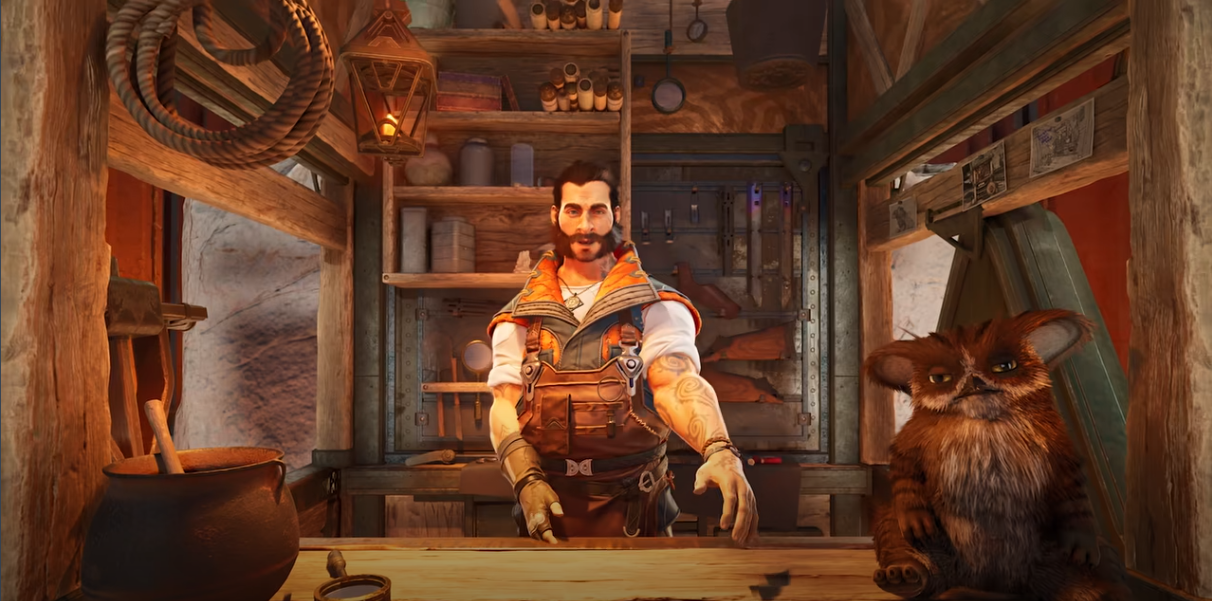
It was supposed to be the “Titanfall successor” we had all been waiting for. When Wildlight Entertainment a studio comprised of the visionary leads behind Apex Legends and Modern Warfare announced Highguard, the hype was palpable. It had the pedigree, the polish, and a prime-time reveal.
Yet, on February 12, 2026, just over two weeks after its January 26 launch, the dream officially collapsed. With massive layoffs confirmed and player counts in freefall, Highguard has provided a masterclass in how a “perfect” team can still miss the mark in an unforgiving market.
Here is the detailed breakdown of why Highguard failed to survive its own launch month.
The Burden of Pedigree: Why Being “Ex-Respawn” Wasn’t Enough
Wildlight Entertainment was built on a promise: the “secret sauce” that made Titanfall and Apex Legends feel so good to play. Fans expected Highguard to be the next evolution of movement shooters. However, having a “dream team” of developers created a double-edged sword.
Expectations were so high that anything less than a genre-defining masterpiece felt like a failure. While the core gunplay was undeniably tight, the game lacked the “soul” of its predecessors. It felt like a collection of perfected mechanics searching for a reason to exist, rather than a cohesive new world players wanted to inhabit.
A Fatal Identity Crisis: The “Shieldbreaker” Mismatch
The biggest mechanical failure of Highguard was its inability to commit to a single genre. It marketed itself as a “PvP Raid Shooter,” a hybrid that attempted to blend three distinct styles:
Hero Shooter: Distinct characters with “Arcane” abilities.
Extraction Shooter: High-stakes looting and gear retrieval.
Survival-Lite: Base-building and defense mechanics.
The centerpiece of this was the “Shieldbreaker” mechanic, which forced teams to shift from high-speed mobility to static base-defense midway through a match. Players found this jarring. The “sweaty,” high-skill movement fans were frustrated by the slow, defensive “siege” phases, while tactical players felt the movement was too chaotic. By trying to please everyone, Wildlight ended up alienating both core audiences.
The “Shadowdrop” That Stayed in the Dark
Wildlight took a massive gamble by “shadowdropping” Highguard almost immediately after its final reveal at the 2025 Game Awards. While this strategy worked for Apex Legends in 2019, the gaming landscape of 2026 is far more cynical.
Without a prolonged public beta or an “Early Access” period to foster a community, players were dropped into a complex meta they didn’t understand. There was no time for “word-of-mouth” to build organically. By the time players realized the game existed, the initial wave of negative Steam reviews had already poisoned the well.
Technical Turbulence and Optimization Woes
In a movement-based shooter, “feel” is everything. If the frame rate drops during a slide-jump or an arcane dash, the illusion is broken. Unfortunately, Highguard launched with significant optimization issues across PC and Xbox Series X/S.
Performance Stuttering: Even high-end rigs (RTX 50-series) reported significant stuttering during 5v5 team fights.
Anti-Cheat Conflicts: The implementation of a restrictive Kernel-level anti-cheat led to system crashes for a large portion of the PC player base.
Desync: High-speed characters often “teleported” during matches, making precise gunplay feel like a lottery.
The Brutal Numbers: From 100k to Ghost Town
The data from the first 14 days told a story that Wildlight’s investors couldn’t ignore. Highguard saw a respectable launch peak of 100,000 concurrent players on Steam. However, the “Day 14” retention was catastrophic.
Within two weeks, the player base plummeted by 95%, leaving the servers populated by fewer than 5,000 players. In the world of free-to-play live services, this is a death sentence. Without a massive, consistent player base to drive microtransactions, the cost of maintaining the servers and a AAA development team became unsustainable overnight.
The Final Blow: Layoffs and “Maintenance Mode”
The tragedy culminated on February 12, 2026, when Wildlight Entertainment confirmed they were laying off “the majority” of their staff. Senior developers took to LinkedIn to express their heartbreak, revealing that even though a year of content was already “in the pipe,” the financial bleeding had to be stopped.
While a “core team” remains to keep the servers running, the reality is that Highguard has effectively entered maintenance mode just 16 days after it began. It serves as a stark reminder that in 2026, even the best developers in the world can’t compete with a lack of clear vision and a saturated market.